

Sleeping under the stars. Making s'mores over a campfire. Hiking, fishing and soaking in the beauty of the great outdoors. A camping trip is one of the best ways to reconnect with nature, your family and even yourself.
Preparation before camping is the key to success, as is following camp safety guidelines once you arrive at your destination. The following camping safety tips will help you plan and enjoy a trip that will create happy memories for years to come.
Our Top 8 Camping Tips
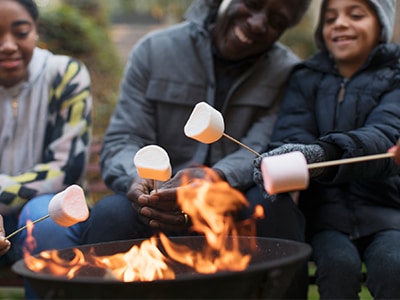
Learn about Campfire Safety
Your campground might have specific campfire regulations, but if not, be safe by keeping the fire at least 15 feet from trees, tents or any other flammable structures. Never leave children or pets alone near a campfire, don't leave the fire unattended, keep a bucket filled with water nearby and douse the flames before heading into your tent for the night.
Respect the Wildlife
One of the biggest thrills of a camping trip is seeing wildlife, but that thrill can turn to danger if safety is disregarded. The National Park Service recommends the following guidelines:2
● Never approach wildlife. In general, there should always be at least 25 yards between you and deer, elk, bison and similar animals; and at least 100 yards distance from bears, coyotes, wolves or other predators.
● Keep food secured in airtight containers, such as sturdy coolers, and don't leave leftovers sitting out. Some campgrounds with particularly active bear populations require the use of bear lockers to store food. Otherwise, you are usually okay keeping food stored in your car—but not in your tent.
● Toss your trash into the campground dumpsters before going to sleep each night.
● Do not feed wildlife. Even the cutest animal might become aggressive if fed by humans.
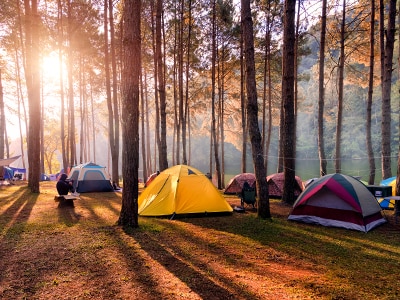
Choose the Right Campground
Consider your family's interests, ages and capabilities when deciding where to camp. Do you want to rough it at a rugged, remote site without flush toilets or showers, or would your family be happier in a fairly cushy campground with swimming pools and playgrounds? The best camping trip is one that suits the campers. Before heading to your campsite, obtain any required licenses, permits and campground regulations. If there are guidelines regarding food storage and disposal, noise levels, pets, number of campers or alcohol consumption, plan your trip accordingly.
Pack Smart and Have an Emergency Contact
Make a list and check it twice before even starting to pack. At a minimum, you'll need a tent or sleeping space large enough for everyone, sleeping bags, clothing, basic toiletries, food, first aid supplies, flashlights, maps, sunscreen, and extra water. Make sure you have the ADT SoSecure app so you can safely check-in with loved ones via location sharing.
Have a First Aid Kit and Seek Help
A first aid kit is a camping must for ensuring everyone’s safety. At a minimum, it should contain bandages and gauze pads in a variety of sizes, antibiotic ointment, sterile wipes, tweezers and a small pair of scissors, an elastic bandage in case of joint twists or sprains, anti-itch cream, sunburn relief spray, an emergency blanket and a squeeze-to-activate cold compress.
If someone in your party is seriously injured or ill, has been bitten by a snake, or has an allergic reaction to a bee sting, head for a ranger station. If you can't get a ranger, try your cell phone. Even if you are out of range of your carrier, you may still be able to contact 911.
Stay Calm When Lost
While getting lost hiking can be scary, the most important camping safety tip is not to panic. Look around and try to relate your surroundings to your map or compass. The Forestry Service cautions against leaving the trail or wandering aimlessly: If you cannot follow the trail back the way you came, as a last resort, follow a river or other source of flowing water downstream. If it gets dark, you or another camper is injured, or you are exhausted, stay put and wait for help to arrive.1
Protect Your Skin and Stomach
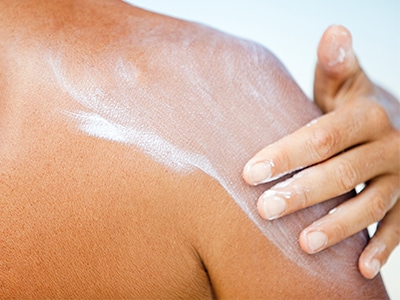
A bad sunburn or itchy bug bites can quickly spoil your camping trip. Apply sunscreen liberally and frequently to everyone in your group, and if the sun is especially intense, wear sunhats and long-sleeve UV-protectant shirts for further protection. Ward off thirsty mosquitoes and other pests with natural or chemical bug repellents such as DEET or citronella oil. A case of food poisoning will end your camping fun quickly. The Centers for Disease Control and Prevention (CDC) suggests keeping food packed in secure, airtight containers stored in an insulated cooler to prevent the growth of bacteria. Cook food just as thoroughly as you would at home. It's easy to leave your burgers a little bit raw in the middle when cooking over a campfire or propane camping stove, so double check that meat is cooked all the way through. Don't let raw meat touch other food, and once you finish cooking, return all uneaten food to the cooler so it won't spoil.3
Remember to Secure Your Home
Before heading out on any vacation, it's a good idea to take steps to secure your home. Have mail held at the post office and make sure to take care of the lawn before leaving for your camping trip! And of course, an installed security system, such as ADT's monitored service, will give you peace of mind no matter where you go. You can remotely access your system, check-in on your home and turn lights on and off wherever you are in the world.
Related Articles
1. Barkly and the Ponemon Institute. "The 2017 State of Endpoint Security Risk Report". Accessed June 1, 2018.
2. Barkly. "The Hype-Free Guide to Fileless Attacks". Accessed June 1, 2018.
3. Simon Wiseman. "Why 'fileless malware' is the biggest new threat to your business." Accessed June 1, 2018.

FEATURED DEAL
Get two Google Nest Cams on us + $250 off your system*
We’ll set up security while you settle in.

*Req. min. $349 pro installed system purchase and 36 mo. pro monitoring plan starting at $59.99/mo. Early term fees. Offer valid on Google Nest Doorbell (battery or wired) and Google Nest Cam (2nd gen wired). Terms here.